informative
26.01.2026
2026 Guide to Japanese Business Etiquette for Foreign Professionals
A concise guide to Japanese workplace etiquette in 2026, highlighting what’s changed, what remains, and how foreign professionals can adapt smoothly.

Japan’s workplace culture is evolving faster than any guidebook can print, yet the expectations placed on foreign professionals remain high. While remote work, AI tools, and a shrinking workforce have nudged some traditions aside, the unspoken rules of ningen kankei (human relations) still decide who gets invited to the next meeting and who stays on the vendor list. This 2026 update distills what has changed, what has not, and how to navigate both without sounding like a walking textbook.
Meetings That Start Before They Start
The clock on the wall may say 09:00, but the real kickoff happens in the shokuba no kuuki (the air of the workplace) ten minutes earlier. Arrive at 08:50, place your business card case on the conference table so the han (name) faces the seat you hope to occupy, and open with “Shitsurei itashimasu” (literally, “I will do rude”) as you slide the door. If the room uses the new IoT sliding doors, wait one second after the sensor beeps; jumping the cue still reads as pushy.
Seating order in 2026 hybrid rooms
- Physical seats follow the classic kamiza (far left from the entrance).
- Virtual tiles on the 85-inch screen place the most senior remote participant top-left; mute your laptop camera so you do not appear twice.
- Never stack your smartphone on the table; the new etiquette is to place it face-down inside your bag to show you trust the 5G-blocking fabric lining now standard in Tokyo offices.
When presenting, use the Ministry of Economy-approved “AI-generated but human-checked” slide footer. It signals you respect both innovation and accountability.
Emails That Feel Like Hand-Written Notes
Japan sent 2.3 billion fewer emails in 2025 than in 2022, yet the ones that do arrive are longer, more seasonal, and more apologetic. The reason: AI proofreaders strip out honorifics unless you actively add them back.
Template for first contact in 2026
Subject: 【初回連絡】○○社の(ご所属)+姓+様 御中

(株式会社)○○
 代表取締役社長 山田 太郎様

時下ますますご清栄のこととお慶び申し上げます。
突然のご連絡失礼いたします...

[Body: maximum 12 lines, ending with seasonal phrase]
 ○○の季節となりましたが、皆様にはご健勝でいらっしゃいますでしょうか。

[Close]
 ご多忙のところ誠に恐縮ですが、何卒よろしくお願い申し上げます。
敬具

(署名)
Reply within 24 hours even if you have no answer; a “kakunin chū” (confirming) macro buys you another 48 hours without sounding evasive.
The 2026 Business Card Exchange
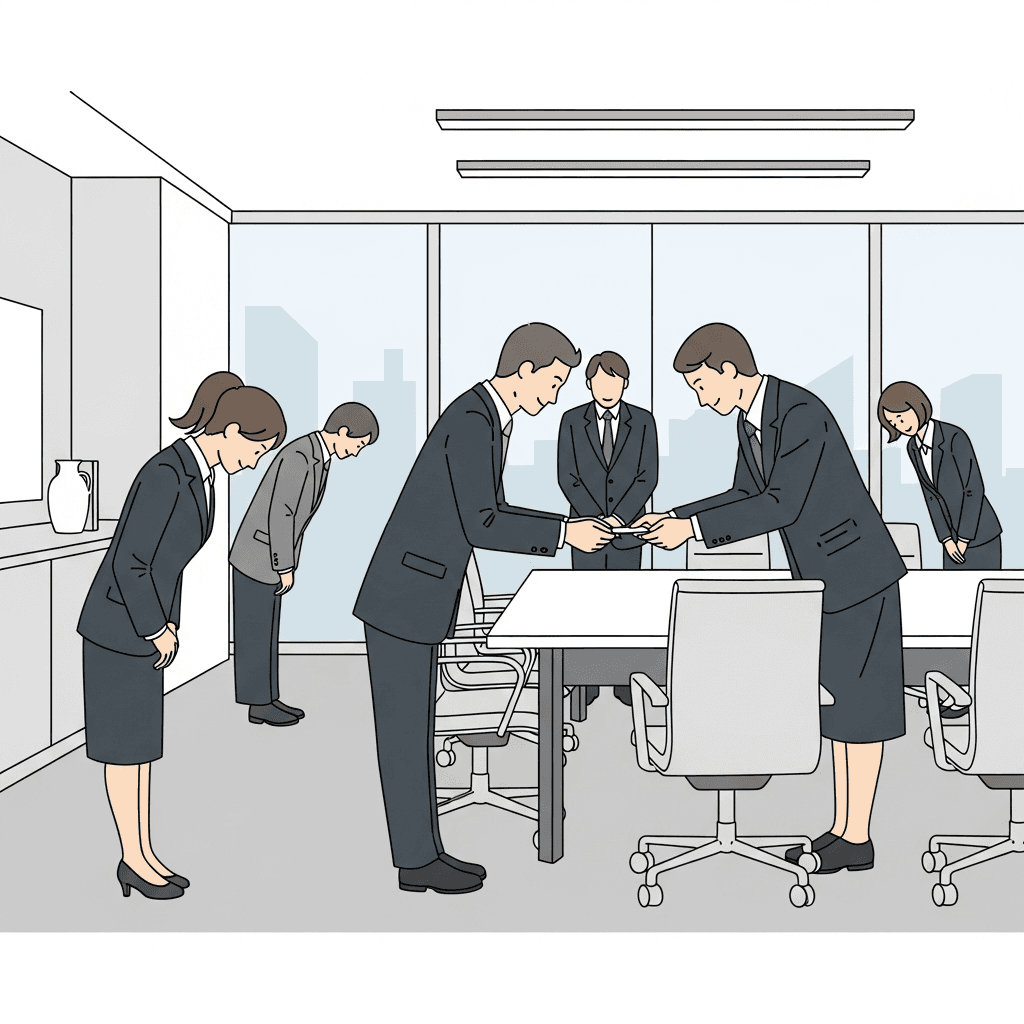
Paper cards are optional for domestic startups but still compulsory for foreign professionals. Print a QR code on the reverse that links to a Japanese-language profile; executives scan it with the My Number app instead of stuffing pockets.
- Offer with both hands, thumbs on the bottom edge.
- Read the card aloud, then place it in a slim carbon-fiber case; never fan or write on it.
- If the other party bows remotely via avatar robot, bow back to the robot’s camera, not the screen.
Daily Office Micro-Moments
Elevator hierarchy
- Pressing “door open” for a senior is welcome, but do not chat; the 2026 shachiku (company livestock) use the 30-second ride to check Qiita posts in silence.
- If you enter last, exit first regardless of rank; the new rule prevents crowding at RFID gates.
Coffee rounds
- The junior still buys konbini coffee, but in 2026 you pre-order via the SmartCUP app and collect from the locker; handing over cash is now rare.
- Ask “Ippai ikaga desu ka?” once; repeated offers feel like pressure.
Overtime signals
- Lights-out at 20:00 is automatic; if your desk sensor detects motion after 20:30, the building pushes an “anzen driving” alert to your phone. Pack up or sign the digital “safety pledge” to stay.
Gift-Giving in the Remote Era
Year-end oseibo and mid-year ochūgen are merging into one “seasonless appreciation” shipment tracked on blockchain. Send artisanal items from your home region with a short story in Japanese; AI-translated blurbs are considered lazy. Avoid knives, anything in sets of four, and items that cannot be stored at room temperature; drone-delivered fresh fruit is acceptable only if you confirm the recipient’s fridge size via the AirRegi app.
Handling Mistakes Without Losing Face
If you mispronounce a client’s name during a hybrid call, apologise to the camera, then send a physical “shazai” postcard within three days. The analog gesture outweighs an email; even Gen-Z managers pin them on cork boards. Use the phrase “Sekkaku no go-shigoto ni fusoku shimashita” (I detracted from your valuable work) rather than “Mōshiwake gozaimasen” alone; it shows you understand the ripple effect of your error.
Quick Reference: 12 Rules That Changed Since 2022
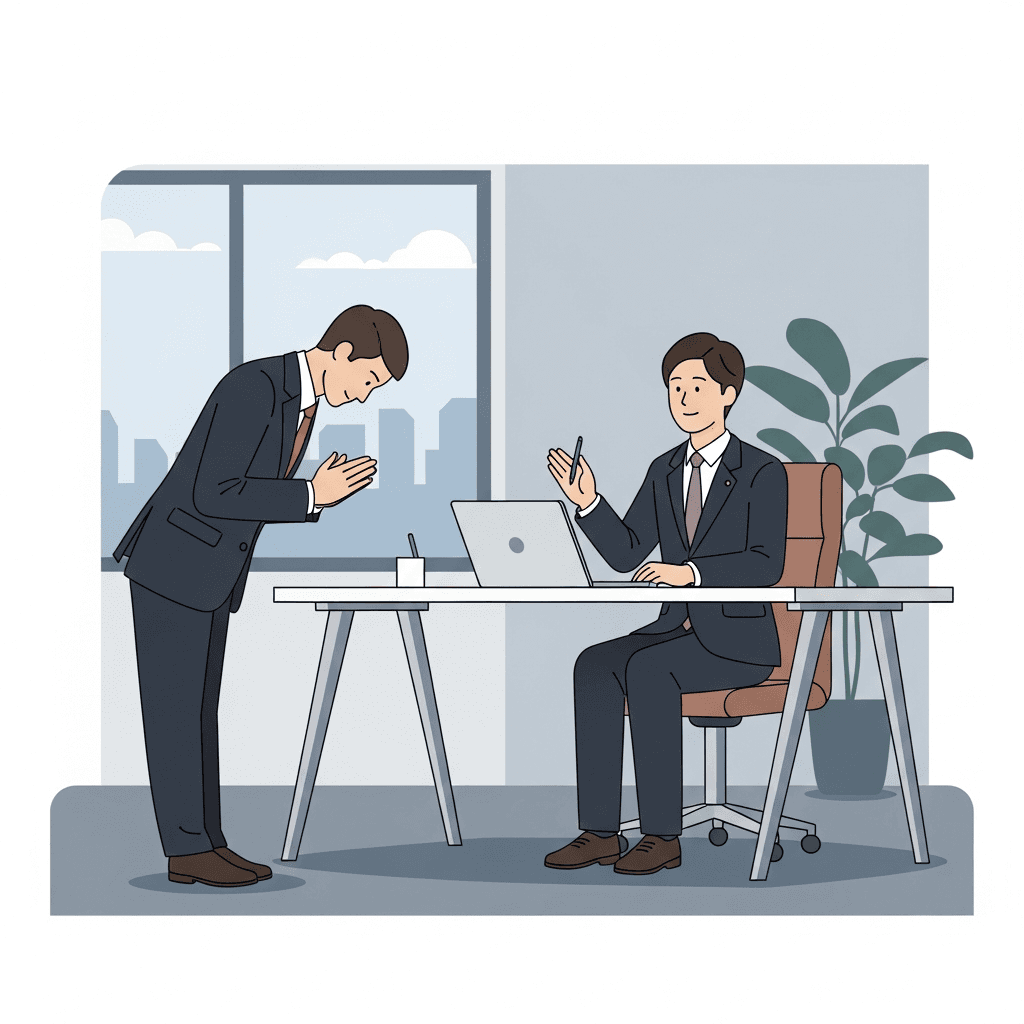
- Bowing angle dropped from 30° to 15° in tech firms; hold 30° for finance.
- Slack emoji: thumbs-up is fine, but avoid the folded-hands emoji; it now implies “prayer for layoffs.”
- Dress code: navy suits outnumber black 3:1; black is reserved for funerals again.
- Online signatures replaced inkan for 47% of contracts; still carry the stamp for banks.
- Nomikai drinking parties are optional; if you skip, send a 1,000-yen SakeGift voucher.
- Honne/tatemae distinction is weaker; Gen-Z prefers “naked discussion” but only after “ippuku” (a breather) post-meeting.
- Business chat apps: use LINE WORKS for startups, Teams for multinationals, never WhatsApp for first contact.
- Punctuality grace: trains delayed by typhoons forgive 30 minutes; screenshot the delay certificate.
- Kōhai no longer pour drinks for senpai at after-parties; self-serve is the new polite.
- Virtual backgrounds: use company-approved “washitsu” tatami room; anime images are career suicide.
- Sustainability: bring your own hashi; disposable chopsticks suggest poor ESG awareness.
- AI interpreters: turn them off for small talk; imperfect Japanese builds more trust than perfect machine diction.
Parting Thought
Japanese etiquette in 2026 is less about memorising every bow angle and more about signalling that you are willing to carry a small portion of the group’s mental load. When in doubt, observe what the second-most junior Japanese colleague does and mirror it one notch more politely. The goal is not perfection; it is to be the foreigner who makes everyone feel that the kuuki (air) is just a little easier to breathe.
Subscribe to Newletter
Subscribe to Newletter