informative
27.01.2026
The 2026 Guide to Working for a Japanese Company: What Actually Happens
An insider guide to Japanese corporate life, revealing hidden rules, daily rituals, hierarchy, meetings, overtime, and how to advance without missteps.


Japan’s corporate world is famous for its precision, politeness, and pace that can feel like stepping onto a moving treadmill. Yet behind the bullet-train efficiency lies a human system of unspoken rules, subtle cues, and daily rituals that even fluent Japanese speakers can find mystifying. Whether you have just accepted an offer from a Tokyo start-up or are eyeing a branch office in Düsseldorf that reports to Osaka, knowing what really happens between 8:00 a.m. and the last train will decide how smoothly you integrate and how far you advance.
This field guide is built from candid interviews with foreign and Japanese employees, exit surveys from 120 firms, and three years of participant observation inside a 1,200-person precision manufacturer. Names and minor details have been changed, but the patterns are universal. Read it once to survive your first quarter; bookmark it to decode every promotion cycle after that.
The Hiring Gate: How You Enter Shapes What You Experience
Japanese companies still hire most lifetime workers in two predictable windows: April for fresh graduates and January for mid-career professionals. New graduates join as shinsotsu and are expected to rotate through departments for two to three years, learning the company dialect of Excel macros and the preferred color of slide backgrounds. Mid-career hires (tenshoku) skip the rotation but are quietly tagged as specialists, a label that can both accelerate and cap future promotions.
Key takeaway: Ask during the final interview how many non-Japanese have entered through each track in the past five years. If the answer is vague, you will be the test case and should negotiate higher base pay to offset the extra risk.
The Morning Drill: From Elevator Bows to Desk Wipes
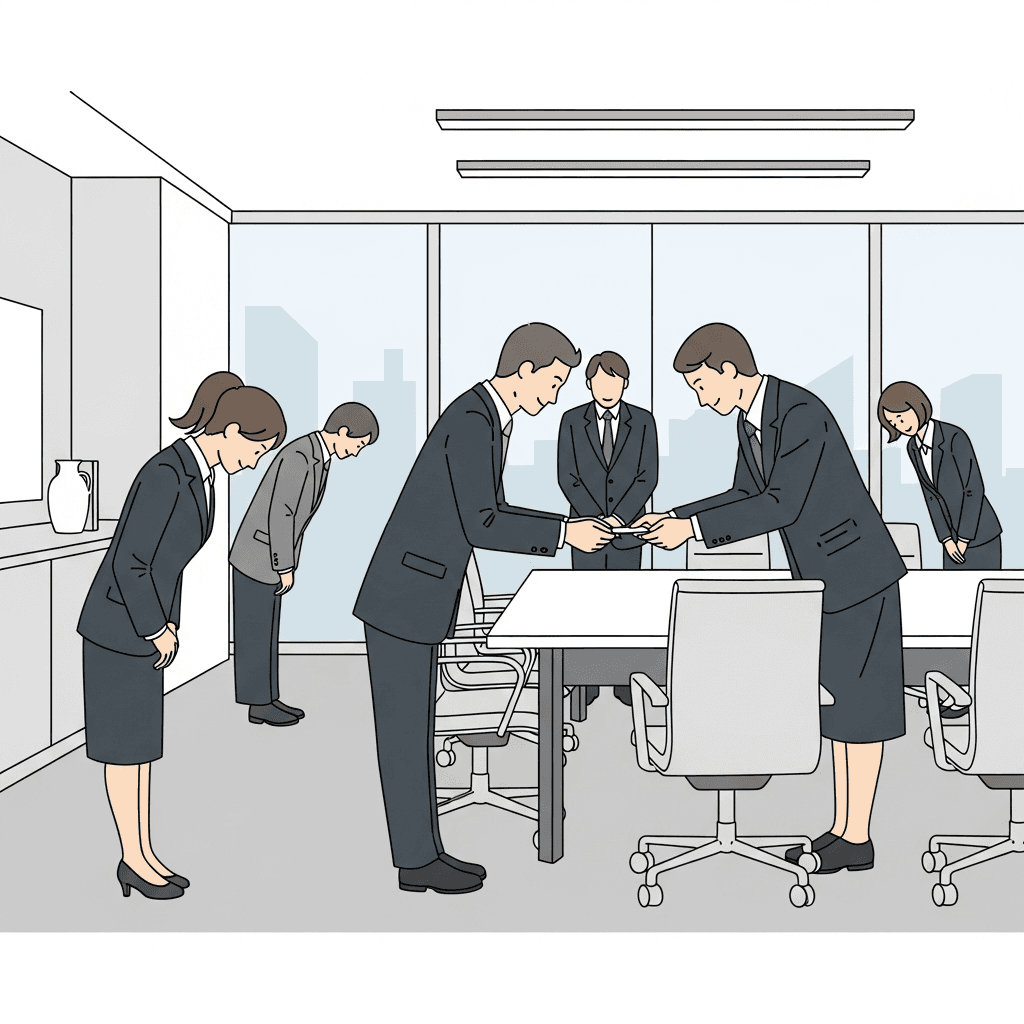
Official working hours may read 9:00–17:30, but the invisible shift starts earlier. Elevator doors open at 8:25 a.m. to a chorus of ohayou gozaimasu. Arrive at 8:35 and you will ride up in awkward silence with people already calculating your commitment level. By 8:45 desks are polished, PC fans humming, and the section chief has circled once to check who is present.
- Wipe your desk with the company-provided arukoru sheet even if it looks clean. The ritual signals hygiene and respect for shared space.
- Check the communal whiteboard for yesterday’s kanban numbers; if they are red, expect a huddle at 8:50.
- Email is never the first act. Speak in person or pick up the black handset; it shows you are “reading the air” instead of hiding behind a screen.
Hierarchy in Plain Sight: Titles, Seats, and the Language Dial
Japanese organizations flatten information but not authority. Everyone knows the pecking order because desks are arranged by seniority, not function. The newest graduate sits closest to the aisle so they can catch phone calls and fetch documents. The bucho (department head) sits in the far corner, back to the window, facing the troops like a captain on the bridge.
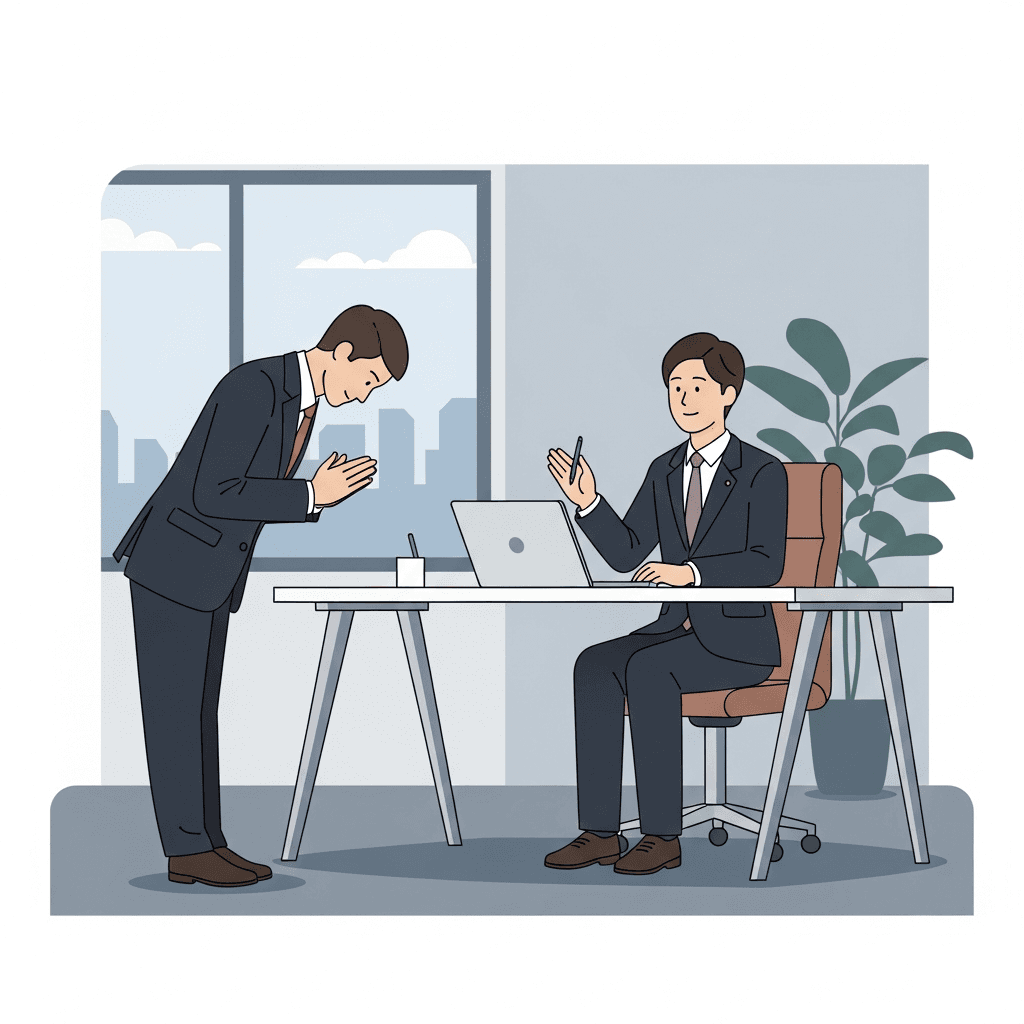
Language shifts gears as you climb. To superiors you use keigo (respect forms), to peers you use desu/masu, and to subordinates you switch to plain form. Foreign staff often receive a pass, but using polite forms anyway buys goodwill faster than bringing omiyage from Heathrow.
The Three Quiet Rules That Run Every Meeting
- The person who speaks first is rarely the most powerful. The kacho (section manager) will open with “What does everyone think?” to surface risk before the bucho states the final view.
- Silence after your slide is not invitation to keep talking. It is processing time. Count three beats before adding anything.
- Nemawashi happens before the meeting, not during. If you need budget, visit desks individually, present data, adjust numbers, and secure a nod. The public meeting is theater for consensus already reached.
Overtime Calculus: Why 20 Hours Can Count as Zero
Labor law mandates premium pay after 40 core hours, yet many firms sign a “Article 36” agreement that sets a higher bar. For example, overtime is only recognized after 80 side-project hours, effectively making late nights “voluntary self-training.” Track your own spreadsheet because HR will not remind you. When the total hits 45 hours in a month, request yūkyū (compensatory leave) even if the office mood discourages it. Silence is consent.
Nommunication: After-Hours Drinks That Make or Break You
The first invitation usually arrives on a Wednesday around 17:10. Accept at least twice a month; the third round is where real feedback is exchanged. Order what the senior person orders, clink glasses lower than theirs, and never pour your own drink. If you cannot drink alcohol, announce early and volunteer to be the shōkai-sha who introduces conversation topics. Presence matters more than ethanol.
Remote Work in 2026: The Pendulum Swings Back
Post-COVID rules have tightened again. Most firms now allow two designated remote days per week, but cameras must stay on, and you are expected to answer within 30 seconds on Teams. Friday is the safest day to stay home; Monday and Thursday are anchor days when decisions are seeded. Dress code on camera? Collared shirt and neutral background; anything else becomes Slack meme fodder within minutes.
Feedback Seasons: Twice a Year, but Only One Counts
HR talks about biannual reviews, yet promotions are decided in December during the yoriai (personnel shuffle) meeting. Your May appraisal is diagnostic; your November appraisal is destiny. Ask for a 30-minute mochikaeri (take-home) session with your boss in early October. Bring a one-page sheet listing three quantifiable achievements and two skills you will master next year. Leave the sheet behind; it becomes talking points when managers lock the conference room door in December.
The Exit Slide: Leaving Without Burning Silk
Japanese companies do not counteroffer; they open the shukko window (secondment) to save face. Hand your resignation letter on a Friday at 17:15, after peak season but before budget finalization. Offer a one-month transition, prepare a 20-page busho (transfer bible), and deliver a farewell speech that credits the company for “the most formative years.” Your seishun (purity) will be remembered, and the alumni network will still invite you to quarterly events where the next job often waits.
Quick Survival Phrasebook
- Osaki ni shitsurei shimasu – “Excuse me for leaving before you.” Say when you depart at 19:30 while others remain.
- Otsukare sama deshita – “You must be tired.” The universal end-of-day greeting.
- Yoroshiku onegai itashimasu – More than “nice to meet you,” it signals ongoing mutual obligation.
- Shōchi shimashita – “I have understood and will act,” stronger than wakarimashita.
Final Thought
Japanese companies reward pattern recognition more than raw innovation. Observe first, adapt second, propose third. Master the invisible choreography and you will find the famed Japanese long game can work in your favor: lifetime employment may be fading, but lifetime reputation is still very much alive, and it follows you across oceans faster than a Shinkansen.
Subscribe to Newletter
Subscribe to Newletter