informative
27.01.2026
The 2026 Guide to Working for a Japanese Company: What Actually Happens
What working in Japan is really like in 2026—daily routines, meetings, hierarchy, startups vs conglomerates, and practical tips for foreign professionals.

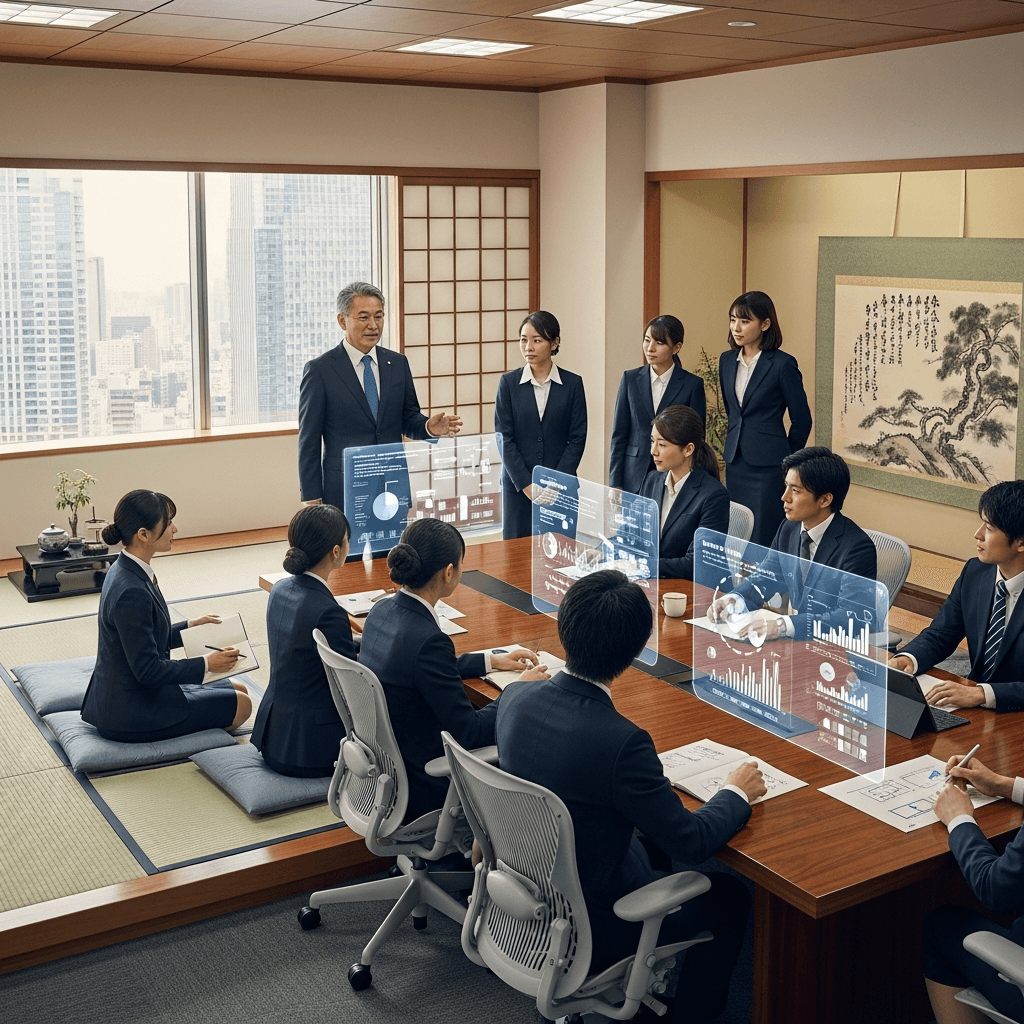
“I’ve heard horror stories about office politics and endless meetings—what’s it really like?”
If that question has crossed your mind, you are not alone. Every year, thousands of international professionals accept job offers in Japan only to discover that the reality on the ground rarely matches the glossy brochure. This guide strips away the myths and shows you, hour by hour and email by email, what actually happens inside Japanese companies in 2026.
Table of Contents
- Overview of Japanese companies
- Daily routines and meetings
- Hierarchy and promotion
- Special cases (remote, hybrid, startups)
- Related topics (rotation, training)
- New vs experienced employees
- Tips to thrive
- Conclusion
What Does It Mean To Work for a Japanese Company?
Being a 正社員 (seishain) or contract employee in Japan means you are part of a system that prizes predictability, group harmony and long-term loyalty. Whether you land in a 30-person startup in Fukuoka or a 90,000-person conglomerate in Tokyo, three constants dominate:
- Standard working hours (9:00–18:00) with 45–60 minutes of unpaid overtime considered “service” time.
- Group training (集合研修) that can last from one week to six months depending on firm size.
- A participatory culture where even junior staff are expected to voice opinions—after they have read the room.
Companies fall into three broad buckets:
- Conglomerates (trading houses, megabanks, Toyota-type manufacturers)
- Mid-tier SMEs that supply the giants
- Startups (fintech, SaaS, biotech) that have multiplied since the government eased stock-option rules in 2023
Daily Routines and Meetings
A typical day begins at 08:40 with chorei, a five-minute standing meeting where the section manager relays KPIs and safety reminders. Email traffic is light until 10:00; instead, colleagues walk to your desk for kuchi-tsugi (verbal hand-offs). Lunch is 12:00–13:00 and is taken with your team—solo desk lunches mark you as antisocial. The afternoon is sliced into two or three internal meetings; expect at least one ringi session where a proposal is circulated until everyone affixes their hanko stamp. The official day ends at 18:00, but most desks remain occupied until 19:15. Fridays are sacred: almost no one schedules nomikai drinking parties, so you can actually catch the 18:30 train home.
Hierarchy and Promotion
Japanese hierarchy is less about screaming bosses and more about invisible rails. You can speak, but only after senpai have signaled it is safe. Titles follow a dual track:
- Generalist (sogo-shoku): Rotate every 2–3 years, destined for management.
- Specialist (senmon-shoku): Deepen technical craft, slower promotion, higher base salary after year seven.
Promotion timing is rigid: April 1, period. Miss the window and you wait 365 days. Performance reviews weigh three factors in equal 33 percent slices:
- Achievement against numerical targets
- Demonstration of company values (punctuality, 5S, cost awareness)
- Nenchō hyōka—how well you elevated team output without overshadowing your boss
Startups vs Conglomerates
Startups
- Decision cycle: days, not quarters.
- Tools: Slack, Notion, GitHub; English is the written language, Japanese remains spoken.
- Equity: 0.1–0.5 percent is common, but cliff periods stretch to four years.
Conglomerates
- Lifetime employment still the default; layoffs require 90-day labor-union negotiation.
- Benefits: family allowance, commuting stipend, corporate dormitories at half market rent.
- Career ladder: 7–9 years to section chief (kachō), another 6 to department head (buchō).
Special Cases
Remote work was legalized nationwide in 2025, but core hours (10:00–15:00) must be covered on company VPN. Hybrid offices issue QR-coded desks; failure to “check-in” three days a week triggers an HR nudge. Clarify these rules at the contract stage—verbal promises evaporate quickly.
Internal Rotation
Expect to switch departments at least once before age 30. A software engineer may spend 18 months in quality control, then move to sales planning. The goal is hitotsu no michi (one-company mindset) and a network that solves crises faster than email chains.
New vs Experienced Employees
Fresh graduates cost roughly ¥200 million to train across five years, so firms protect that investment with golden handcuffs (corporate housing, pension top-ups). Mid-career hires negotiate higher base salaries but receive fewer training resources and smaller bonuses—accept the trade-off.
Tips & Best Practices
- Master keigo (respect language). One misplaced verb can stall a meeting.
- Build nemawashi offline: talk to stakeholders individually before the formal vote.
- Accept feedback silently; rebuttals come later, preferably with data.
- Keep a nippu (daily report) of 3–5 bullet points; managers skim these before appraisals.
- Seek a kōhai–senpai mentor outside your direct chain; they provide cover during rotations.
Conclusion
Japanese corporate life is neither paradise nor prison. It is a rule-bound game that rewards patience, observation and incremental improvement. Learn the rhythm, respect the hierarchy, contribute to the group and you will unlock stability, lifelong friendships and a front-row seat to one of the world’s most fascinating business cultures.
Subscribe to Newletter
Subscribe to Newletter