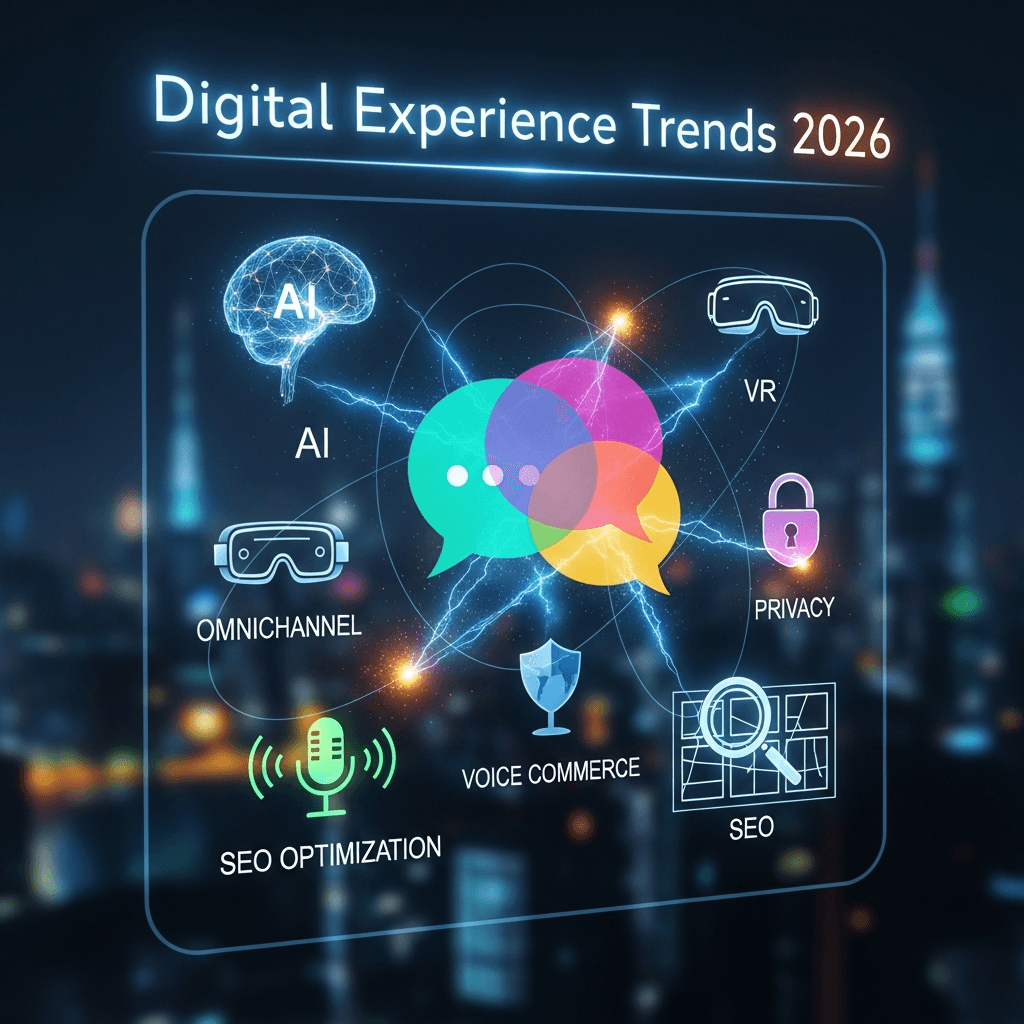
Top digital experience trends shaping 2026, from AI personalization to immersive, privacy-first, omnichannel customer journeys.
Author
Motivo Inc.
Blog Article Manager
The digital landscape is evolving faster than ever, and 2026 is poised to be the year when customer expectations and cutting-edge technology finally meet at the center of the stage. Brands that once competed on price or product alone now win (or lose) on the quality of every swipe, click, conversation, and micro-moment. Below you will find the seven most important digital experience trends that organizations need to master before the next planning cycle begins.
Hyper-Personalization Becomes Table Stakes
Static segments and broad personas are fading into memory. By 2026, leading companies will operate on dynamic profiles that update in real time from behavioral, contextual, and psychographic data streams. Machine-learning models predict not just what a customer might want, but when, where, and in what mood they will want it.
Key capabilities to invest in now:
Customer data platforms that unify first-, second-, and third-party signals
AI decisioning engines that trigger offers or content in under 100 milliseconds
Edge analytics that personalize even when connectivity is spotty
The payoff is measurable: early adopters already report 20-30% lifts in average order value and 15% reductions in churn.
AI-Driven Customer Support Feels Human
Chatbots have grown up. Next-generation conversational agents understand intent, sentiment, and even sarcasm. They hand off to live agents with full context, eliminating the dreaded "please repeat your issue" loop. More impressive, they can autonomously resolve complex workflows such as rescheduling flights, processing returns, or troubleshooting IoT devices.
Best-practice checklist:
Train models on historical call transcripts and knowledge-base articles
Maintain a feedback loop so every interaction improves future accuracy
Disclose when the user is speaking with AI to maintain trust
Companies that deploy these systems strategically cut support costs by up to 40% while increasing Net Promoter Score.
Immersive Content Experiences Break the 2D Barrier
Augmented reality (AR), virtual reality (VR), and mixed reality (MR) are moving from gimmick to growth engine. Retailers let shoppers place furniture in their living rooms at true scale. B2B firms walk prospects through virtual factories. Training departments create risk-free, hands-on simulations.
Action items:
Start with mobile AR to reach the widest audience
Optimize 3D assets for fast load times (under 2 seconds)
Measure success with engagement metrics such as dwell time and conversion uplift
Gartner projects that by 2026, 30% of digital experiences will include some form of immersive technology.
Omnichannel Personalization Delivers One Memory Across All Touchpoints
Consumers expect brands to remember them whether they open an app, visit a store, call support, or interact on social media. Omnichannel personalization weaves these interactions into a coherent narrative. When done right, a customer can add an item to a cart on mobile, receive a location-based discount via push notification, and pick up the product in-store without ever showing an email confirmation.
Implementation roadmap:
Map the customer journey across every channel
Create a single identity graph using deterministic and probabilistic matching
Serve consistent product, price, and promotion data through APIs
Retailers mastering omnichannel grow revenue 9% year-over-year compared with 3% for those still operating in silos.
Privacy-First Marketing Turns Compliance into Competitive Advantage
Regulations such as GDPR, CCPA, and the forthcoming EU ePrivacy Regulation have made data collection trickier, but they also present an opportunity. Brands that collect minimal, purposeful data and explain its use in plain language earn consumer trust. Zero-party data (information a user intentionally shares) becomes the new currency.
Tactics to adopt:
Deploy consent-management platforms that support global regulations
Offer tangible value (exclusive content, early access, loyalty points) in exchange for data
Conduct quarterly privacy audits and publish transparent reports
Research shows 62% of consumers are more loyal to companies that protect their privacy.
Voice Commerce Moves from Early Adopter to Mainstream
Smart speakers, in-car assistants, and voice-enabled TVs are turning spoken language into a new checkout lane. By 2026, voice commerce is expected to exceed $80 billion in annual sales. Success requires rethinking the entire purchase funnel for ears instead of eyes.
Quick wins:
Optimize product names and descriptions for natural-language queries
Provide one-reorder commands ("Reorder my last coffee")
Build trust with audio signatures and secure payment tokens
Brands that add voice options now report 25% higher repeat purchase rates among users 35-50.
AI-Optimized SEO Replaces Traditional Keyword Tactics
Search engines now use deep learning to understand context, entities, and sentiment. Ranking factors shift daily based on user intent signals. AI-optimized SEO focuses on topical authority, structured data, and user engagement metrics rather than keyword density.
Steps to stay ahead:
Create topic clusters that answer every related question a human (or bot) might ask
Use schema markup for rich results in voice, visual, and traditional search
Monitor algorithm volatility with AI-powered SEO platforms that recommend real-time tweaks
Sites that adopt AI-driven optimization see organic traffic gains of 30-50% within six months.
Putting It All Together
The common thread running through every 2026 trend is intelligent orchestration. Data, content, and context must flow seamlessly across systems, channels, and moments. Organizations that treat these trends as isolated projects will waste budget and frustrate customers. Those that weave them into a unified digital experience will enjoy higher revenue, lower acquisition costs, and lasting loyalty. The future is not some distant horizon; it is the next sprint cycle. Start building today, iterate tomorrow, and lead the market in 2026.
Subscribe to Newletter
Recent articles
news
01.07.2026
Japan Job Market Outlook 2026: Hiring Trends, High-Demand Skills & Salary Insights
Explore Japan's 2026 job market trends, high-demand skills, salary insights, and hiring outlook for employers and international professionals.
tech
27.01.2026
AI Trends 2026
Seven AI trends shaping 2026, from autonomous agents and edge intelligence to responsible design and sustainability showing how fast adopters will pull ahead.
tech
27.01.2026
Digital Experience Trends for 2026
Top digital experience trends shaping 2026, from AI personalization to immersive, privacy-first, omnichannel customer journeys.
informative
26.01.2026
2026 Guide to Japanese Business Etiquette for Foreign Professionals
A concise guide to Japanese workplace etiquette in 2026, highlighting what’s changed, what remains, and how foreign professionals can adapt smoothly.
news
27.01.2026
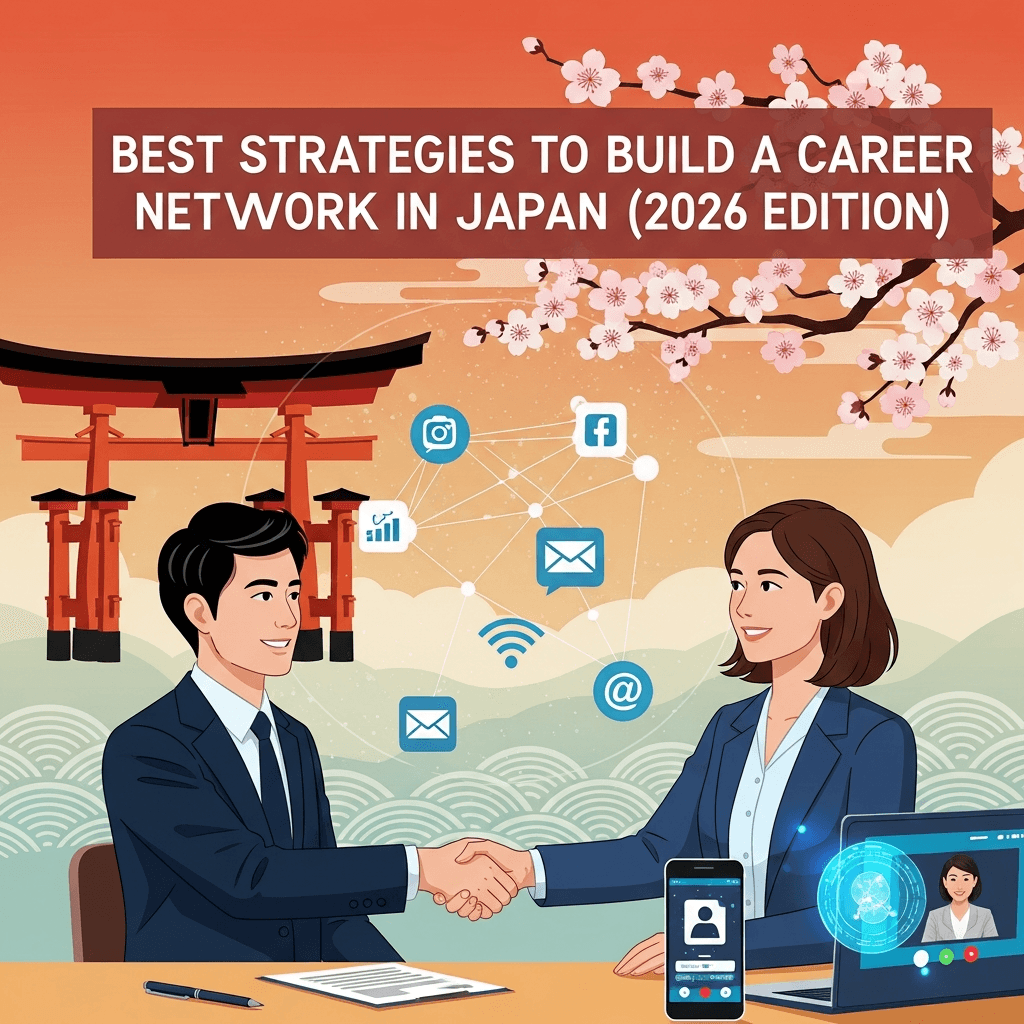
Best Strategies to Build a Career Network in Japan (2026 Edition)
A modern guide to networking in Japan for 2026, showing how to build meaningful connections using hybrid events, digital tools, and updated cultural norms.
informative
27.01.2026
Career Myths About Working in Japan — Debunked for 2026
Debunking six myths about working in Japan in 2026, revealing how labor laws, remote work, and global hiring have reshaped careers for foreigners.
informative
27.01.2026
Exploring Quantum Mechanics in 2026: What Lies Ahead
An in-depth look at how quantum theory, hardware, and real-world applications converge in 2026, marking the shift from experimental science to everyday impact.
news
27.01.2026
How I Landed My First Developer Job in Japan Without a Traditional Resume
How developers can land jobs in Japan without a traditional resume by using a portfolio-first strategy, networking, and strong online presence.
informative
27.01.2026
Mastering Japanese Job Interviews: 2026 Playbook for Foreign Applicants
A 2026 playbook for non-Japanese candidates to master AI-driven interviews, cultural fit, and etiquette to land jobs in Japan’s evolving market.